There was a time when telling a joke meant actually telling a joke. Someone would start with a setup, pause for dramatic effect, and then deliver the punchline. Whether it was a clever one liner, a knock-knock joke, or a savage Yo Mama joke, traditional humor relied on timing, creativity, and a bit of performance.
Then memes arrived and changed the game. Instead of explaining a joke, people could now share a single image with a caption that captured an entire punchline instantly. Memes spread faster than any traditional joke ever could, traveling across social media feeds, group chats, and comment sections within seconds.
Even so, classic jokes refuse to disappear completely. Some of the most iconic formats especially Yo Mama jokes continue to thrive alongside modern meme culture. In this article, we will look at how memes took over internet humor, why visual jokes dominate online, and why traditional jokes still manage to survive.
The Golden Age of Traditional Jokes
Before memes took over the internet, humor was mostly shared through spoken jokes, joke books, and live performances. People told jokes at school, during family gatherings or while hanging out with friends. The goal was simple: build a setup and deliver a punchline that made everyone laugh.
Classic jokes were easy to remember and spread through word-of-mouth. Over time, several popular formats became widely recognized.

Types of Classic Jokes
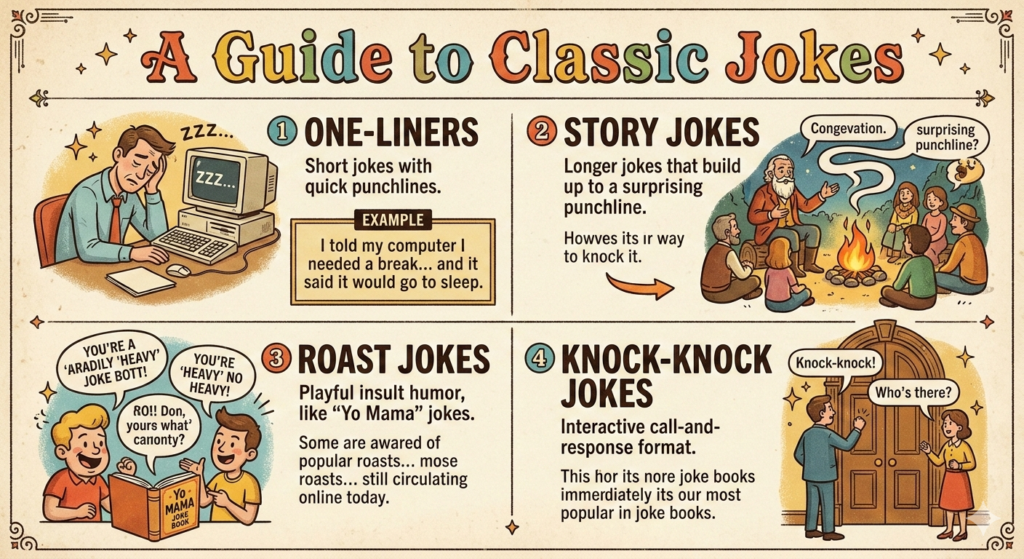
One-Liners
Short jokes with quick punchlines.
Example: “I told my computer I needed a break… and it said it would go to sleep.”
Story Jokes
Longer jokes that build up to a surprising punchline.
Roast Jokes
Playful insult humor, especially popular in “Yo Mama” jokes, where people compete with exaggerated roasts. Many of the best Yo Mama jokes ever still circulate online today.
Knock-Knock Jokes
Interactive jokes with a simple call-and-response format that became extremely popular in joke books.
Why Traditional Jokes Worked
Traditional jokes thrived because they were simple, memorable, and social. Anyone could tell them, and the humor came not only from the punchline but also from the reaction of the audience.
However, as communication moved online, humor started to evolve. Instead of long setups and spoken punchlines, people began sharing quick visual jokes that could spread instantly across the internet. That shift led to the next stage of comedy: the rise of memes and viral internet humor.
Why Memes Took Over the Internet
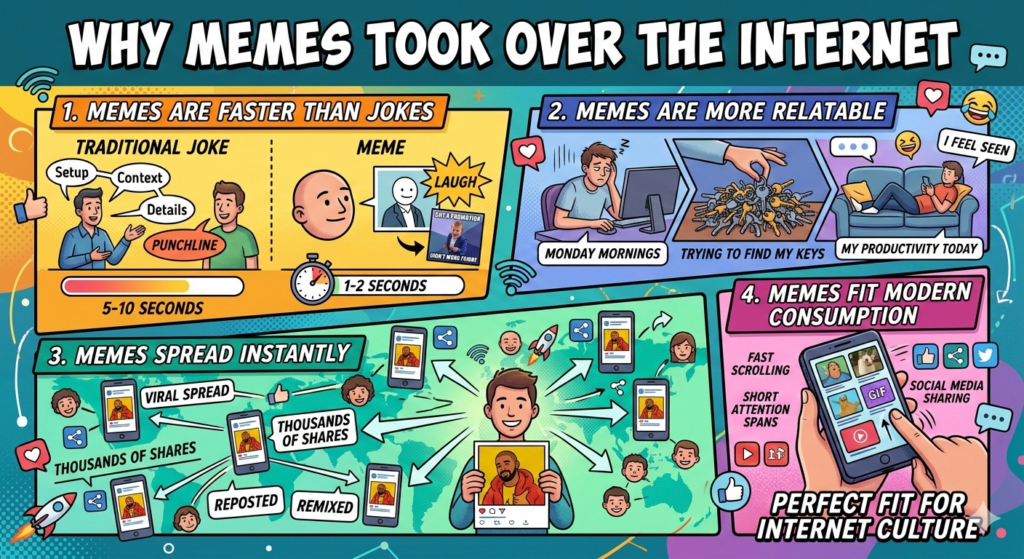
Memes didn’t just appear randomly—they became popular because they perfectly fit the way people consume content online today. Fast scrolling, short attention spans, and social media sharing all helped memes replace traditional joke formats.
Memes Are Faster Than Jokes
Traditional jokes usually require a setup and a punchline. Memes skip the long explanation and deliver the joke instantly using an image and a short caption. A person can understand a meme in just a few seconds while scrolling through platforms like Instagram, TikTok, or Reddit.
Memes Are More Relatable
Many memes are built around everyday situations—work stress, relationships, school life, or internet culture. Because people recognize these situations immediately, the humor feels more personal and shareable.
Memes Spread Instantly
Another reason memes dominate modern humor is how quickly they travel online. A funny meme can be shared, reposted, and remixed thousands of times within hours. This viral nature makes memes one of the fastest-spreading forms of comedy in internet culture.
If you want to see examples of how visual humor works today, check out collections of the funniest memes on the internet, where simple images turn into viral jokes seen by millions.
Why Yo Mama Jokes Never Died
Even in the age of memes, Yo Mama jokes remain popular because they are simple, quick, and perfect for playful roasting. Their short format makes them easy to remember and easy to share. Today, these jokes still appear in comment sections, gaming chats, and on platforms like TikTok and Instagram.
If you want to see more examples, check out our list of the best Yo Mama jokes & Funniest Jokes Ever Written , proving that this classic joke style still survives in modern internet humor.
Memes vs Jokes: Key Differences
Both memes and traditional jokes aim to make people laugh, but they work very differently. Traditional jokes rely on storytelling and punchlines, while memes focus on quick visual humor that people can understand instantly.
Here’s a clearer comparison:
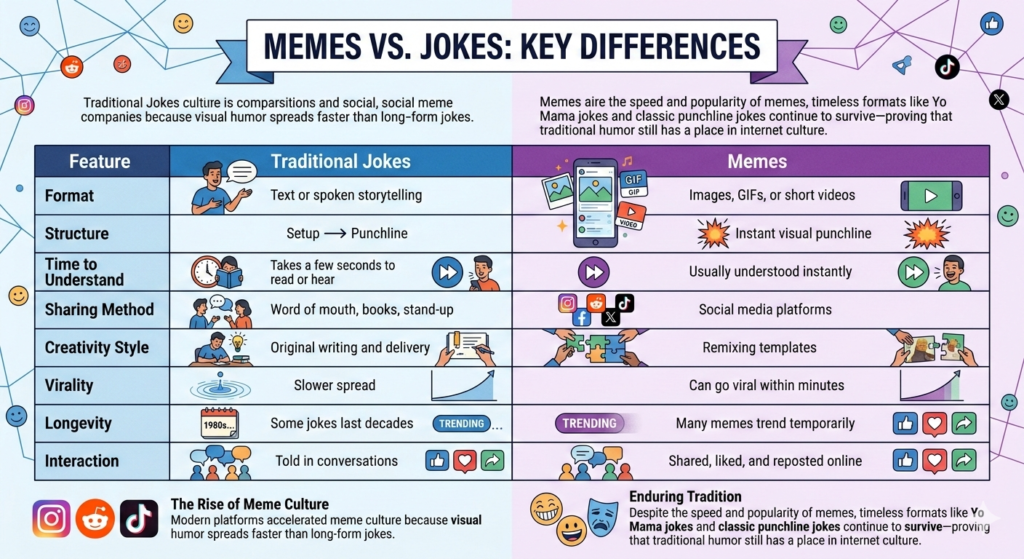
Modern platforms like Instagram, Reddit, and TikTok accelerated meme culture because visual humor spreads faster than long-form jokes.
However, despite the speed and popularity of memes, timeless formats like Yo Mama jokes and classic punchline jokes continue to survive—proving that traditional humor still has a place in internet culture.
The Future of Humor
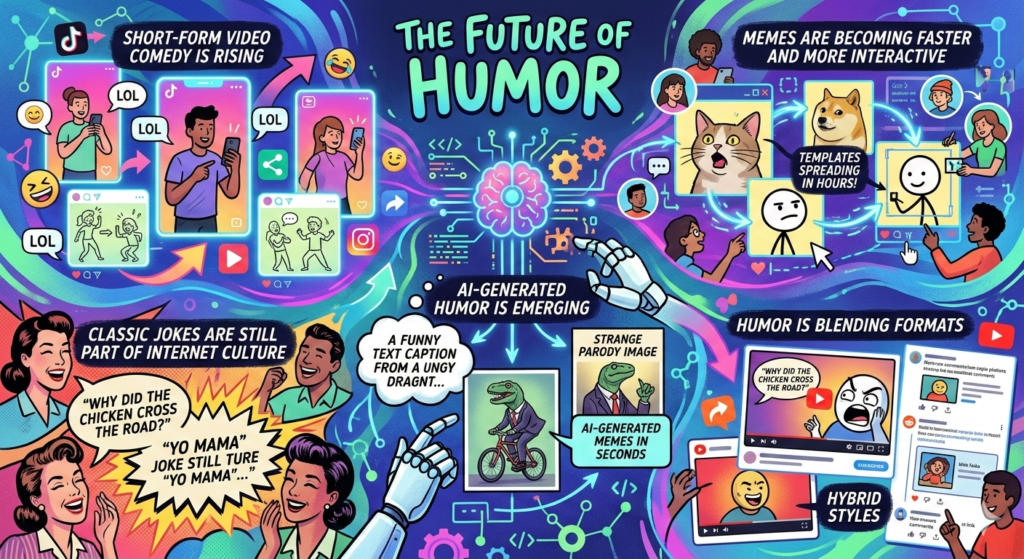
The way people create and share humor continues to evolve. Here are some trends shaping the future of comedy online:
Short-form video comedy is rising
Platforms like TikTok, Instagram, and YouTube Shorts are turning quick skits and reaction videos into viral jokes.
Memes are becoming faster and more interactive
Meme templates now spread within hours and are constantly remixed by users across social media.
AI-generated humor is emerging
AI tools allow people to generate memes, captions, and parody images instantly.
Classic jokes are still part of internet culture
Traditional punchlines and roast humor—especially Yo Mama jokes—continue appearing in comments, memes, and videos.
Humor is blending formats
Modern comedy now mixes memes, short videos, classic jokes, and internet roasts into new hybrid styles of humor.
Conclusion: Humor Keeps Evolving
Humor has changed dramatically over the years. Traditional jokes once relied on storytelling, clever punchlines, and wordplay, while modern humor often comes in the form of fast, visual memes shared across platforms like Instagram and TikTok.
Memes may dominate today’s internet culture, but classic joke formats still hold their place. Timeless humor styles—especially roast jokes like Yo Mama jokes and long punchline jokes—continue to entertain new generations.
In the end, the evolution of humor isn’t about one format replacing another. It’s about how comedy adapts to the way people communicate. Memes may run the internet today, but classic punchlines—and especially Yo Mama jokes—are probably never going away.
Read More Blogs on dailyjokeshub , and also follow Whatsapp channel for latest updates.