A joke is just a sentence until it makes you laugh. In that split second between setup and punchline, your brain makes a rapid calculation. It predicts what’s coming then suddenly gets proven wrong. That tiny disruption creates delight.
But here is the twist: not everyone finds the same disruption funny. Some people love harmless dad jokes. Others prefer dark humor that pushes boundaries. Some laugh at exaggerated legends like Chuck Norris. Others enjoy intellectual science jokes. Humor isn’t universal- it’s deeply personal and psychological.
To understand what makes a joke funny, we need to understand how expectation, emotion and culture collide.
The Science Behind Why We Laugh
When you hear a joke your brain undergoes a complex psychological and neurological process. It activates multiple regions at once- including those responsible for language processing, emotion and reward. If your brain successfully resolves the joke’s surprise, it releases feel-good chemicals like dopamine. That “aha” moment forms the foundation of humor.
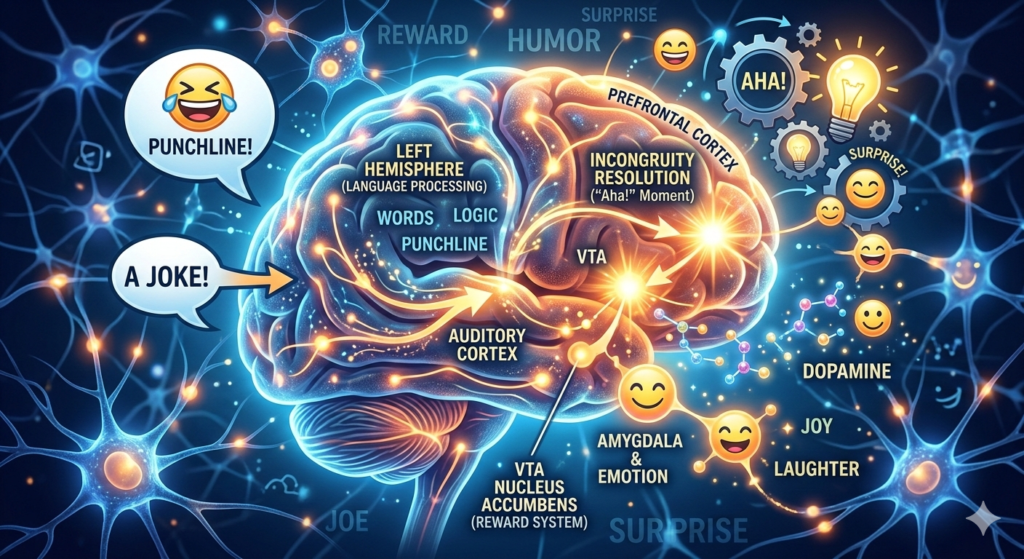
Neuroscience research shows that humor activates the brain’s reward circuitry, particularly areas linked to motivation and pleasure. This explains why a clever punchline feels satisfying rather than just surprising.
Did You Know?
Studies suggest people are up to 30 times more likely to laugh in social settings than when alone- highlighting laughter’s powerful role in bonding and group dynamics.

Laughter isn’t just a reaction to something funny; it’s also a social signal. According to research summarized by neuroscientist Sophie Scott much of our laughter occurs in conversation rather than in response to structured jokes. This shows that humor evolved not just for entertainment but for connection.

Understanding this mental process helps explain why everything from dad jokes to dark humor can trigger such different reactions. The neurological reward loop- surprise, resolution, dopamine- is what makes humor engaging and even addictive, which is why we keep scrolling through memes in 2026.

The 3 Main Theories of Humor
Psychologists have studied humor for decades, and most explanations fall into three core theories. Researchers like Sigmund Freud and modern humor expert Rod Martin have helped shape how we understand why jokes actually work.
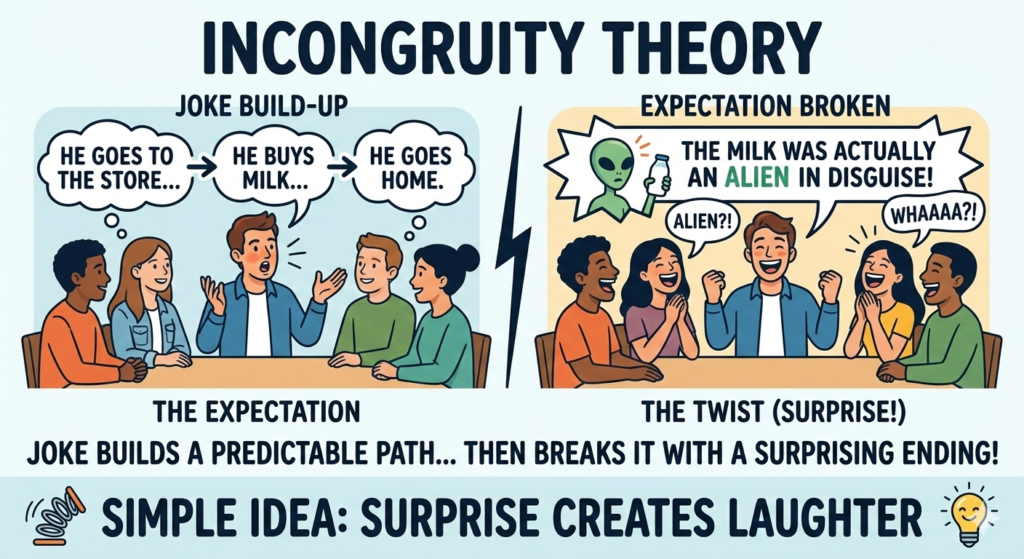
Incongruity Theory
We laugh when something unexpected happens. A joke builds an expectation, then breaks it with a surprising twist.
Simple idea: Surprise creates laughter.
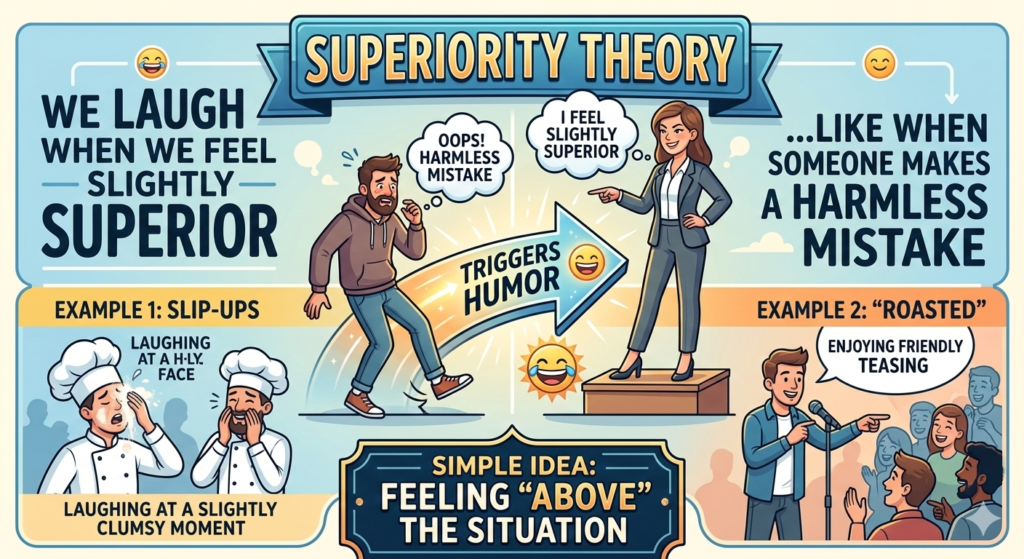
Superiority Theory
We laugh when we feel slightly superior- like when someone makes a harmless mistake or gets roasted.
Simple idea: Feeling “above” the situation triggers humor.
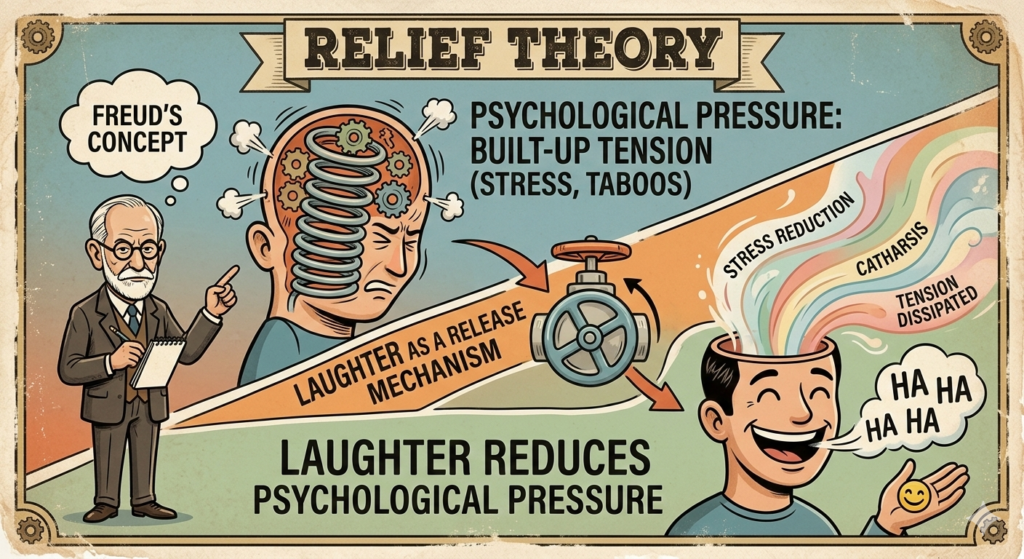
Relief Theory
Popularized by Sigmund Freud, this theory says humor helps release built-up tension, especially around stress or taboo topics.
Simple idea: Laughter reduces psychological pressure.
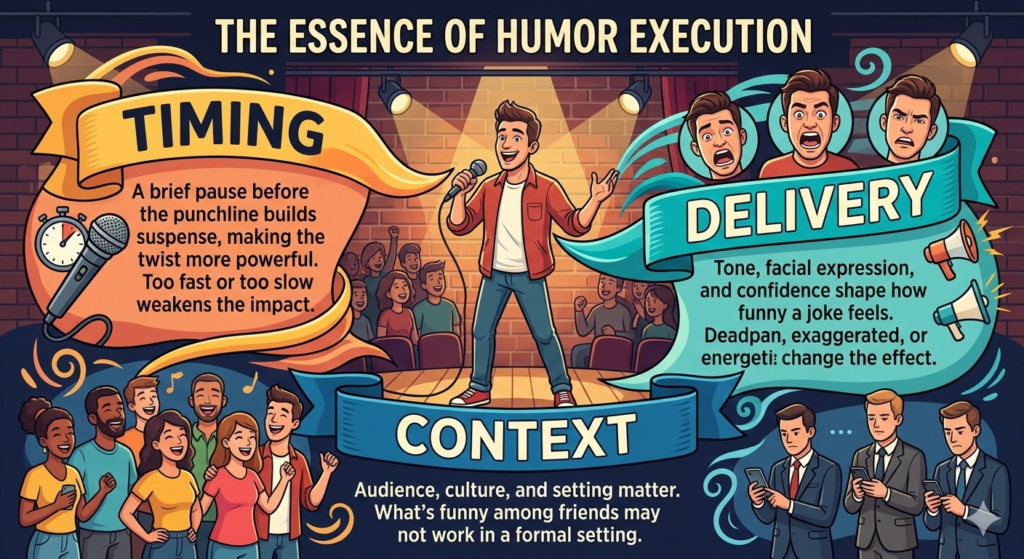
Timing, Delivery & Context
Even a great joke can fail without the right execution. Humor depends on when, how, and where it’s told.
Timing: A brief pause before the punchline builds suspense and makes the twist more powerful. Too fast or too slow weakens the impact.
Delivery: Tone, facial expression and confidence shape how funny a joke feels. Deadpan, exaggerated or energetic styles change the effect.
Context: Audience, culture and setting matter. What’s funny among friends may not work in a formal setting.
Why Different People Find Different Jokes Funny
Not everyone laughs at the same joke because humor is personal. Our personality, culture, mood and life experiences all shape what we find funny.
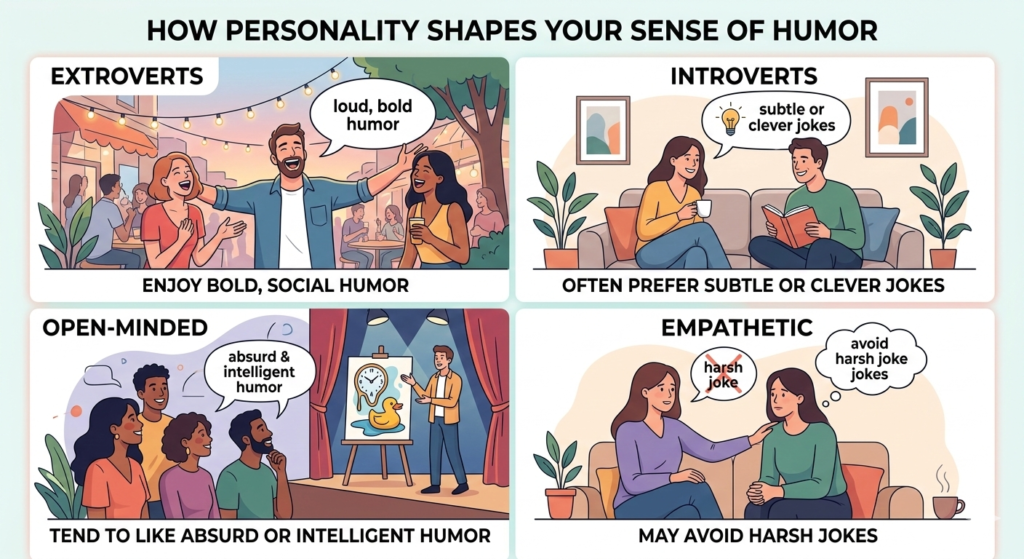
Personality Differences
Extroverts may enjoy bold, social humor, while introverts often prefer subtle or clever jokes. People who are open minded tend to like absurd or intelligent humor, whereas empathetic individuals may avoid harsh jokes.
Cultural & Social Background
Humor depends on shared language, norms
and references. A joke that works in one culture might not make sense or might offend in another.

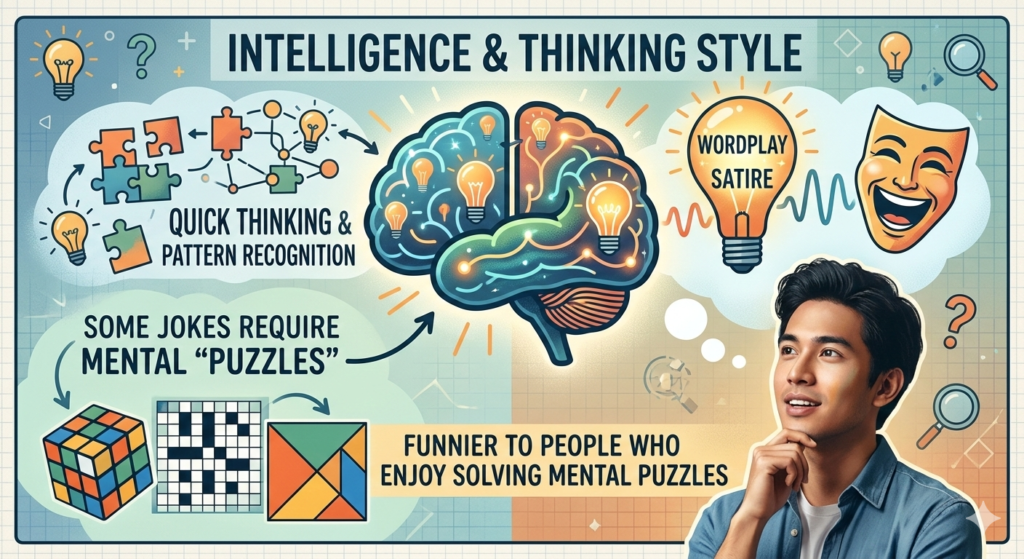
Intelligence & Thinking Style
Some jokes require quick thinking and pattern recognition. Wordplay and satire are funnier to people who enjoy solving mental “puzzles.”
Emotional State
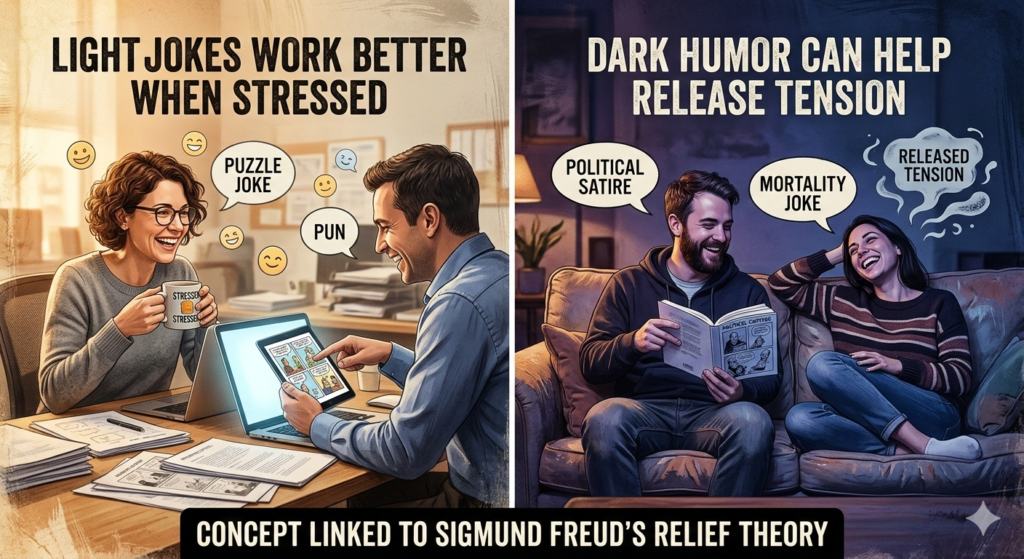
Mood matters. Light jokes work better when stressed, while dark humor can help release tensiona- concept linked to Sigmund Freud’s relief theory.
Values & Identity
People laugh more at jokes that match their beliefs and social identity. Humor often strengthens group connection.

Types of Humor
Humor comes in many forms, and each style works for different psychological reasons. Below are some popular types of humor-along with why they make us laugh and how they connect to specific joke categories.
Wordplay & Corny Humor
Wordplay humor uses puns and predictable twists that reward the brain for getting it. The simplicity makes it comforting and shareable- which is why dad jokes never go out of style.

Shock & Taboo Humor
This humor pushes boundaries and creates tension before releasing it through laughter. When done right, the surprise feels bold rather than offensive. See examples in dark humor jokes.
Intelligent & Educational Humor
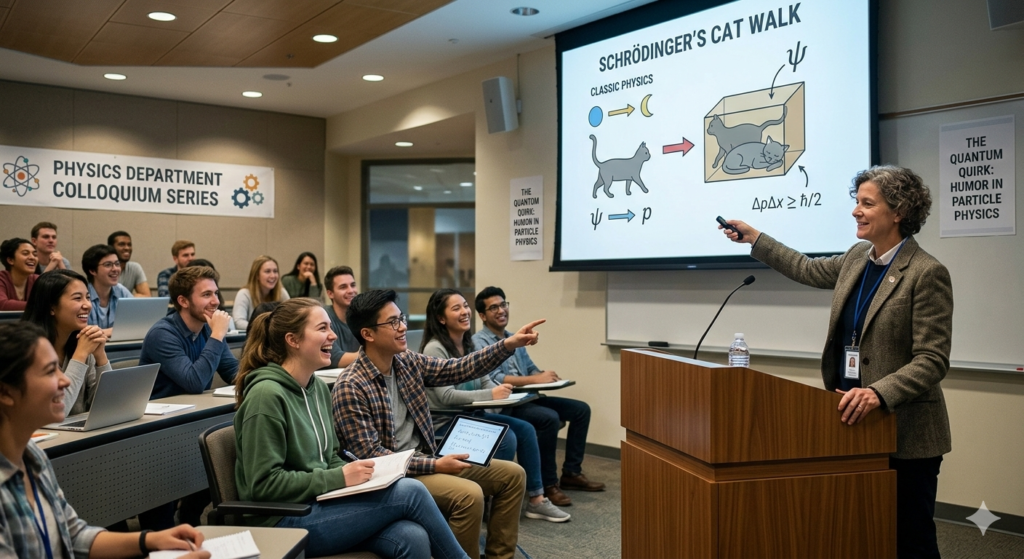
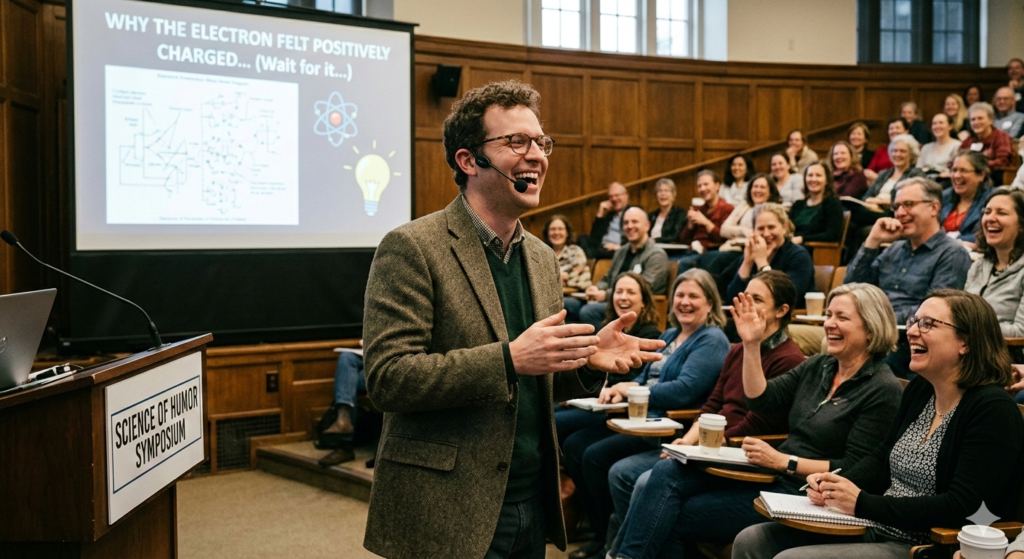
Smart jokes rely on knowledge and clever connections. The humor lands best when the audience understands the reference- just like many science jokes.
Insult & Roasting Humor
Roast humor exaggerates flaws in a playful way. The absurdity makes it funny instead of mean, as seen in classic yo mama jokes.

Hyperbolic & Absurd Hero Humor
This style builds humor through extreme exaggeration and impossible claims. That’s the formula behind legendary Chuck Norris jokes.

FAQ Section
Why do we laugh at inappropriate jokes?
Is humor linked to intelligence?
Why do we laugh more in groups?
Conclusion:
Understanding what makes a joke funny comes down to psychology, surprise and timing. From clever wordplay to bold exaggeration, every type of humor works because it taps into how our brains process tension, emotion and connection.
Now explore your favorite style enjoy pun-filled Dad Jokes, edgy Dark Humor Jokes, brainy Science Jokes, savage Yo Mama Jokes or legendary Chuck Norris Jokes and see which one makes you laugh the most.
Loved it? Share your favorite jokes on Instagram, Facebook and other social media platforms. Bookmark this guide for easy copy-paste laughs and keep spreading the humor across social sites.
Read more such blogs on dailyjokeshub